
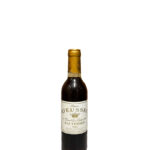
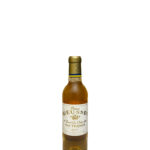
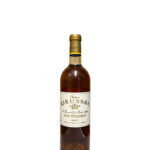
Château Montrose 1994, Saint Estèphe, Bordeaux
Located in the northern part of Bordeaux’s Left Bank, Château Montrose is one of the great names of Saint-Estèphe and one of the rare properties classified as a Second Growth (Deuxième Cru Classé) in the 1855 Classification. Known for producing wines of remarkable power, structure, and longevity, Montrose has long held a reputation for being a benchmark in Médoc winemaking—classic, disciplined, and unshakably consistent.
A Legacy Forged in Gravel
The origins of Château Montrose date back to the early 19th century, when a parcel of the Calon-Ségur estate was transformed into a new vineyard by Etienne Théodore Dumoulin. The estate owes its name, “Montrose,” to the pinkish-purple hue the heather-covered hills turned in spring—mont rose, or “pink hill.” The Dumoulin family quickly elevated Montrose to prominence, and by 1855 it was included in the prestigious classification as a Deuxième Cru.
Ownership changed hands a few times through the 20th century, but the arrival of the Bouygues family (Martin and Olivier Bouygues) in 2006 marked a new chapter. Best known for their international industrial empire, the Bouygues brothers committed themselves to restoring Montrose to the very pinnacle of Bordeaux winemaking, investing massively in the vineyard, cellar, and environmental sustainability.
A Terroir Defined by the Garonne
Montrose’s vineyard spans over 95 hectares in a single, unbroken block—a rarity in Bordeaux. The deep gravel and clay subsoils, typical of Saint-Estèphe, provide excellent drainage while retaining enough water to sustain vines during dry periods. This, combined with the estate’s proximity to the Gironde estuary, helps to moderate temperatures and reduce frost risk, creating a stable microclimate ideal for Cabernet Sauvignon.
The vineyard is planted predominantly to Cabernet Sauvignon (around 60%), with Merlot (32%), Cabernet Franc, and Petit Verdot completing the blend. These varieties contribute to Montrose’s signature style: muscular, brooding wines with great purity of fruit and extraordinary aging potential.
Precision Winemaking and Sustainability
Following the Bouygues family’s acquisition, Château Montrose underwent a profound renovation, including the construction of a state-of-the-art gravity-flow winery. Every detail—from grape selection to fermentation and aging—is executed with meticulous precision. The estate is committed to sustainable practices and has embraced organic viticulture, with parts of the vineyard certified and others in conversion.
Montrose ferments its wines in temperature-controlled stainless steel vats and ages them in a high percentage of new French oak barrels, typically around 60%. This combination of traditional and modern methods ensures both power and finesse.
The Wines: From Strength to Grace
The grand vin, Château Montrose, is renowned for its profound structure, layered dark fruit, tobacco, graphite, and spicy oak. With age, it evolves into something majestic—more nuanced, perfumed, and silky. The wine demands time in the bottle to show its full character, often requiring a decade or more before reaching its peak.
In addition to the grand vin, the estate also produces a second wine, La Dame de Montrose, made from younger vines and parcels not selected for the top cuvée. It offers earlier drinking pleasure but still reflects the estate’s rigorous standards.
Critical Acclaim and Collector Status
Montrose is frequently lauded by critics for its age-worthiness and has earned numerous 95+ point scores from top reviewers such as Wine Advocate, Vinous, and Wine Spectator. Vintages like 1990, 2009, 2010, and 2016 are considered legendary and sought after by collectors worldwide.
Château Montrose stands as a pillar of classic Bordeaux winemaking—resolutely elegant, impeccably crafted, and deeply rooted in its terroir. For lovers of structured, long-lived wines with a pedigree of excellence, Montrose represents one of Saint-Estèphe’s finest and most enduring voices.
Reviews
There are no reviews yet.