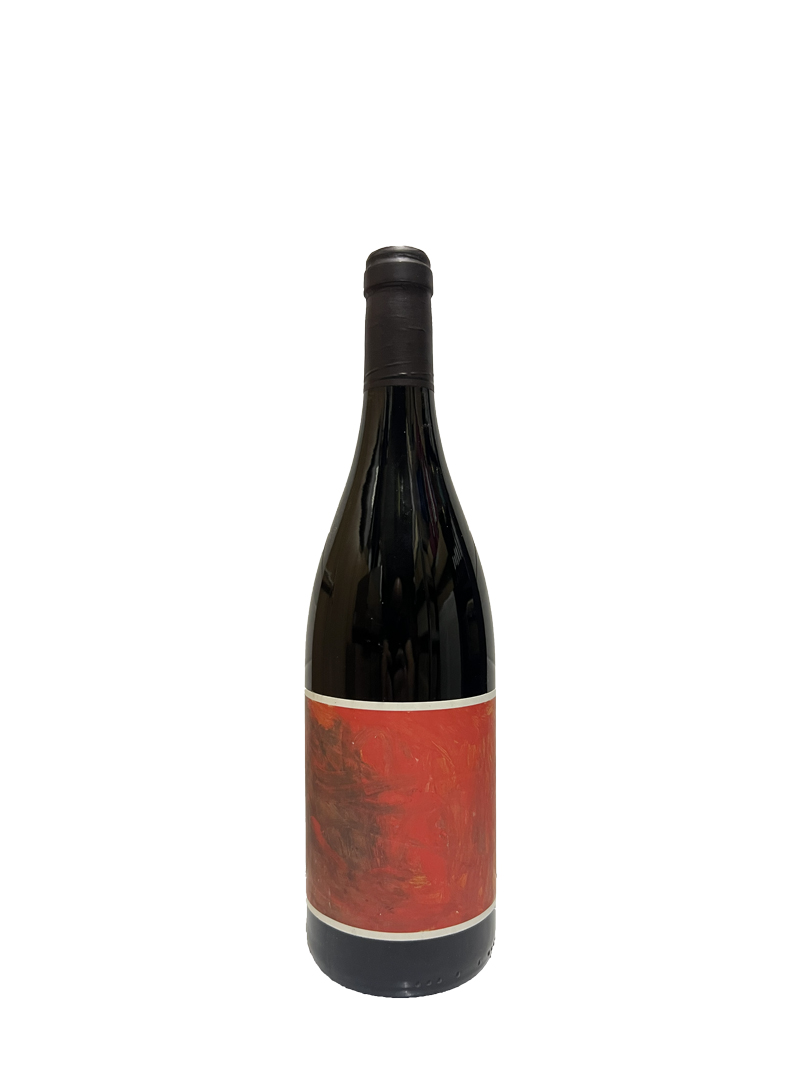
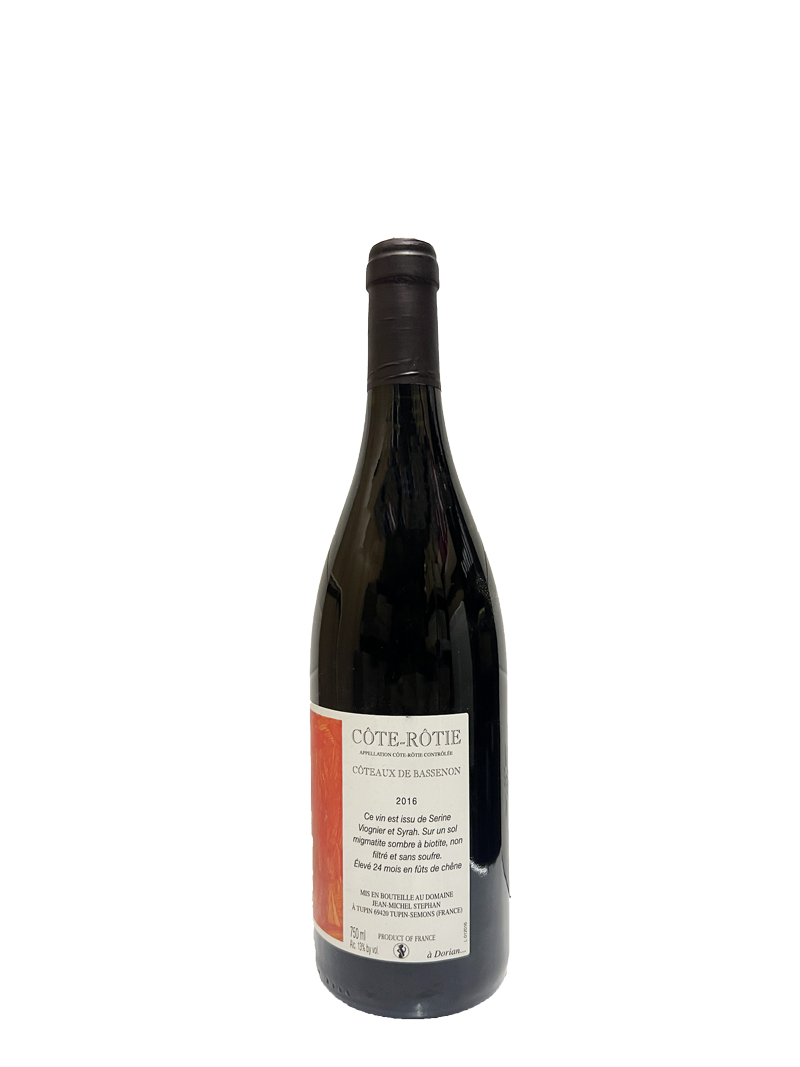
Côte-Rôtie Coteaux de Bassenon 2016, Jean-Michel Stéphan
Jean-Michel Stéphan: The Quiet Rebel of Tupin-et-Semons
Some winemakers make wine. And then there is Jean-Michel Stéphan — a man who lives wine, breathes it, understands it in a way that nobody else in the Côte-Rôtie practices.
The story does not begin with him. It begins with his grandfather, a farmer who planted vines at the edge of his vegetable garden to mark his boundary from the neighbour’s land. At a time when the steep hillsides of the Côte-Rôtie were considered so unimportant that they were given away for free alongside the purchase of flat, fertile farmland. Nobody wanted those slopes. Nobody except those who loved them.
Jean-Michel decided to take those slopes seriously. In 1991 he took over two hectares of vines. He trained with Jean-Paul Brun in Beaujolais — the school of natural wine, of carbonic freshness, of respect for the living must. Then he returned to Tupin-et-Semons and did something radical: he made Côte-Rôtie with no sulphur. No filtration. No compromise.
That was 1994. His colleagues thought he was mad.
At the time, a sulphur-free Côte-Rôtie was unthinkable. The appellation was known for its structured, tannic, often heavily oaked wines — wines you had to forget in a cellar for years. Stéphan did the opposite: living, vibrating, pulsing wines that draw their energy from the soil rather than the barrel.
The Sérine: A Treasure Saved from Oblivion
The heart of his estate is the Sérine — the original, pre-phylloxera Syrah of the Côte-Rôtie, finer, more complex and more volatile than modern clones. On the Bassenon parcel, Sérines planted in 1896 are still producing. 130-year-old vines. Roots that plunge into the granite deeper than you can imagine. Yield: minimal. Intensity: maximal.
These old vines give no quantity. They give character. They give history. They give a flavour you will not find anywhere else in the world.
Bassenon: The Parcel at the Edge of the World
The Coteaux de Bassenon sits at the far southern end of the appellation, facing the vineyards of Condrieu. The terroir is complex: ancient Rhône alluvium, glacial moraine, dark biotite granite, leucogneiss — a geological mosaic that gives the wine its incomparable, almost electric minerality.
Here, everything is done by hand. On some terraces, no tractor can pass. So a horse pulls the plough. Or a man walks on foot. Stéphan does not call this romantic. He calls it necessary.
A Wine Without a Mask
No SO2. No added yeasts. No filtration. No fining. Stéphan’s wines are radically transparent — what the grape gives arrives in the glass. Which means: in a great year like 2016, the wine is breathtaking. In a difficult year, it can be austere. That is not a weakness. That is honesty.
In some circles, Jean-Michel Stéphan is considered the greatest Syrah winemaker in the world. You can debate that. But anyone who has drunk a Bassenon — truly drunk it, with time, with air, with patience — understands why.
Reviews
There are no reviews yet